Adventures of a Squirrel, Supposed to be Related by Himself

Adventures of a Squirrel, Supposed to be Related by Himself

Anonymous

Religion / Classics / Nonfiction

My dear Anne, When I was upon a visit at your good mamma\'s, I promised to make you a present. Now a present for a girl of your age (if I only considered your age) is easy enough to find; but when I think on your good sense, I cannot reconcile myself to buy for you what I otherwise should. Not to keep you in suspense, I have at last found out a present, which I hope will be agreeable to you. Attend to the following adventure: I was walking, about a week ago, in the fields adjoining my house at Croydon. The evening was so delightful, I wandered insensibly much farther than I at first intended to go. The prospect was so charming, and the hay smelt so agreeably, that I never thought of returning, till I found myself rather tired, so sat down by one of the haycocks to rest myself. After having sufficiently rested, I made the best of my way towards home; when, (guess my surprise!) putting my hand in my pocket, I felt something soft, which seemed as if it moved, and pulling it out, I found it to be as pretty a Squirrel as you would wish to see. He ran round the table several times, and giving a good spring, seated himself on the dumb waiter. I immediately said to one of my servants: "I wonder how this squirrel got in my pocket," when my surprise was greatly increased by hearing it say, "If you will use me kindly, I will relate my history, and then you will learn what made me get into your pocket." My dear Anne immediately came in my mind, for I thought nothing would be more agreeable to her than, "The Adventures of a Squirrel, related by himself." "Come and sit nearer to me," said I, "that I may hear better all you are going to relate." After having seated himself once more, he began as follows. ADVENTURESOF ASQUIRREL, &c. CHAPTER I. I was born in Caen Wood, near Hampstead. Being taken out of the nest, (in which were my mother and my brother,) very young, I shall begin by telling you, I was carried to the house of him that stole me, which was at Hackney. Here I was tied to a long pole, till he could procure a cage, which was not till the end of three weeks; when (what he termed) a very nice one came home, with a chain to fasten round my neck, with a padlock, when I came out of the cage. The chain he fastened on me directly, and it remained on, till my house was properly aired. When he thought I might with safety enter my house, he took off the chain, and carried me, exulting in his prize, to his sister; for he had kept me quite secure, till he could present me to her politely. She thanked him for his kind present, and then proposed making a trial of my abilities in the exercising way. You, perhaps, may wonder what this exercise was. My cage was made to go round upon wires, so that whenever I moved it went round, and caused a tinkling with some bells that were fixed for that purpose. At this exercise I remained nearly half an hour, and whenever I attempted to stand still, they pricked me with a pin. Luckily the dinner bell rang, or they might have kept me at it half an hour more. I will now give you some account of my master and his family....
Read online
  • 97
What Answer?

What Answer?

Anna E. Dickinson

School / Classics

his first and only novel by Anna E. Dickinson, a well-known 19th-century orator, abolitionist, and advocate of racial equality and women's rights, attracted tremendous interest when it first appeared in the fall of 1868, and was enthusiastically endorsed by Harriet Beecher Stowe. Set in the midst of the Civil War, this controversial work of fiction traces the tragic history of an interracial marriage, which is doomed to disaster by the intolerance of a northern society that refuses to accept racial equality. The central love story provoked strong reactions from supporters and critics alike. Dickinson's friends praised the power of her tale and the poignancy of the lovers' fate, while some critics voiced disgust at the very notion of miscegenation. To portray such a relationship only three years after the Civil War was to many an act of remarkable audacity. Though the work will never be praised as a masterful literary creation, its themes of racial tension and justice have given it enduring value. Also lending the story interest are Dickinson's impassioned descriptions of two infamous historical incidents - the terrible New York City Draft Riots of July 1863 and the storming of Fort Wagner by black troops of the famed 54th Massachusetts regiment. Even more important is the glimpse she provides into the conflicted attitudes of average white Northern citizens toward blacks just after the War. A scene on a Philadelphia streetcar depicting the mixed reactions of the passengers to a confrontation between a drunken white bigot and a wounded black soldier seems to forecast the Rosa Parks bus incident and the beginnings of the Civil Rights movement almost one hundred years later. With an interesting and informative introduction by J. Matthew Gallman (Henry R. Luce Professor of the Civil War Era, Gettysburg College), this new edition of a unique work long out of print will be welcome in courses on African American and American history.
Read online
  • 96
Boy Scout Aviators

Boy Scout Aviators

Richard Harding Davis

Mystery / Classics / Fiction

"As long as I can\'t be at home," said Harry Fleming, "I\'d rather be here than anywhere in the world I can think of!" "Rather!" said his companion, Dick Mercer. "I say, Harry, it must be funny to be an American!" Harry laughed heartily. "I\'d be angry, Dick," he said, finally, "if that wasn\'t so English—and so funny! Still, I suppose that\'s one reason you Britishers are as big an empire as you are. You think it\'s sort of funny and a bit of a misfortune, don\'t you, to be anything but English?"
Read online
  • 89
Comedy_American Style

Comedy_American Style

Jessie Redmon Fauset

Fiction / Classics / Cultural

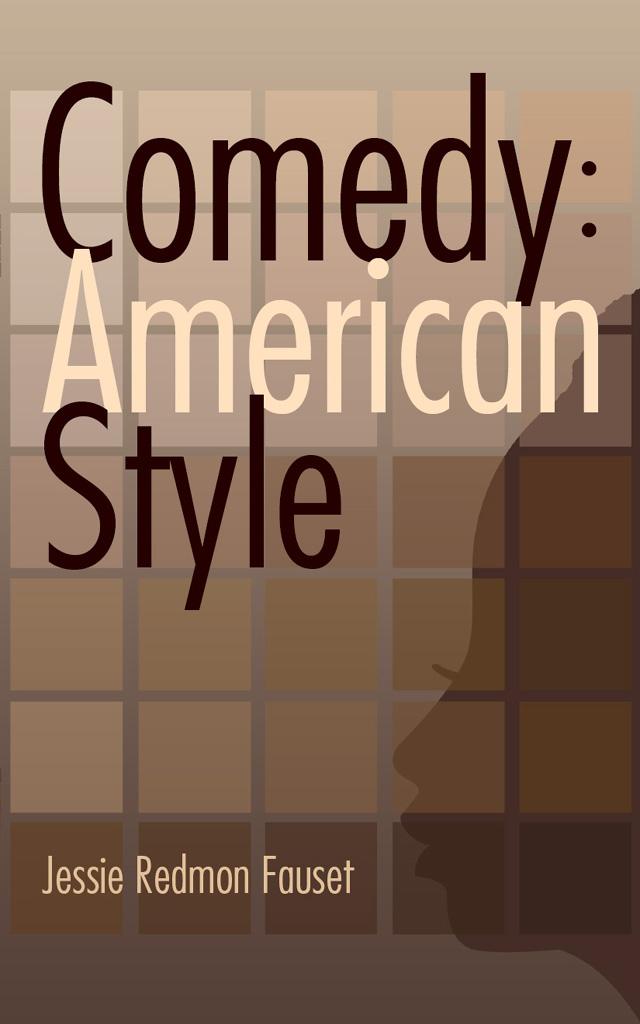
This ironically titled tale by an influential figure in African-American literature explores the tragic effects of color prejudice and self-hatred. Jessie Redmon Fauset's 1933 novel paints a haunting portrait of internalized racism with its depiction of a domineering mother whose determination for her children to pass as white leads to devastating results for the entire family.African-American editor, poet, essayist, and novelist Jessie Redmon Fauset (1882–1961) was a prominent figure of the Harlem Renaissance. An editor of the NAACP magazine The Crisis, she was also an editor and co-author of the African-American children's magazine, The Brownies' Book. Her fourth and final novel, Comedy: American Style, features vivid characterizations and enduring themes that continue to resonate with modern readers.
Read online
  • 88
Boy Scout Automobilists; Or, Jack Danby in the Woods

Boy Scout Automobilists; Or, Jack Danby in the Woods

Richard Harding Davis

Mystery / Classics / Fiction

This book is part of the TREDITION CLASSICS. It contains classical literature works from over two thousand years. Most of these titles have been out of print and off the bookstore shelves for decades. The book series is intended to preserve the cultural legacy and to promote the timeless works of classical literature. Readers of a TREDITION CLASSICS book support the mission to save many of the amazing works of world literature from oblivion. With this series, tredition intends to make thousands of international literature classics available in printed format again – worldwide. --This text refers to an out of print or unavailable edition of this title. --This text refers to an out of print or unavailable edition of this title.
Read online
  • 85
183